

Choosing your first builder is a big decision, and it often feels simpler in the early stages than it does later. Once quotes, inclusions, and allowances are on the table, the differences between builders become much clearer.
At first, everything looks the part. The display home is impressive. The brochure is polished. The first conversations feel easy. Then reality kicks in… Comparing like-for-like pricing, working out what’s actually included, and getting comfortable with a whole new language (variations, progress claims, prime costs).
That’s where things can get messy.
It doesn’t mean anything has been done wrong. It’s just the learning curve first-home buyers face while also making big calls, quickly.
In most cases, the stress comes from avoidable surprises. This guide covers the most common mistakes, why they happen, and how to avoid them, with practical checks that make the decision clearer. Ridgewater Homes is a strong fit for buyers who want a more transparent process, better guidance, and fewer unwelcome surprises later on.
Mistake #1: Falling for the “cheap base price” trap
Here’s the sneaky part about new-home quotes: two homes can look similar on paper, but one is missing half the things you assumed were standard.
So, the price looks sharp… until you start adding back in what you actually want.
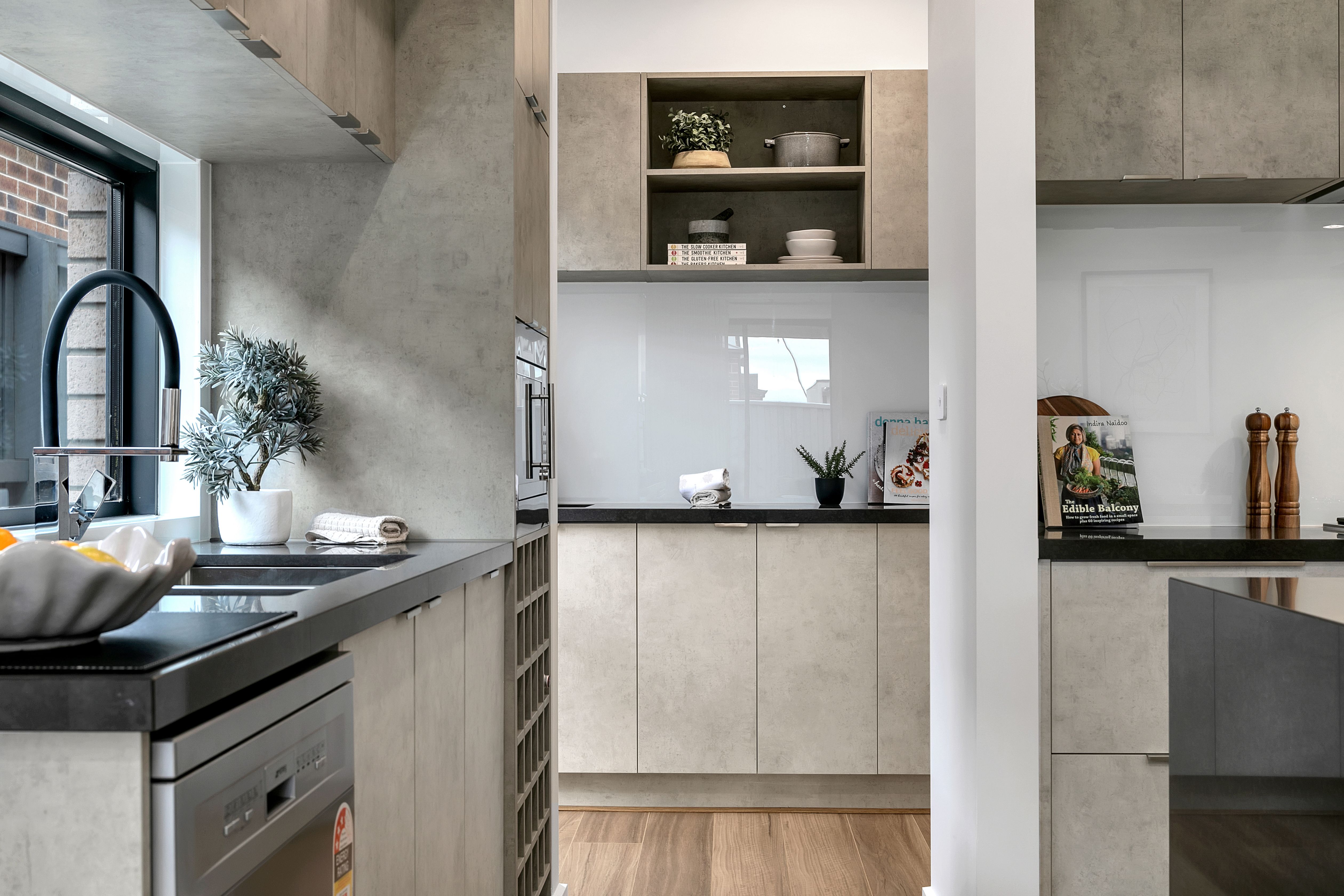
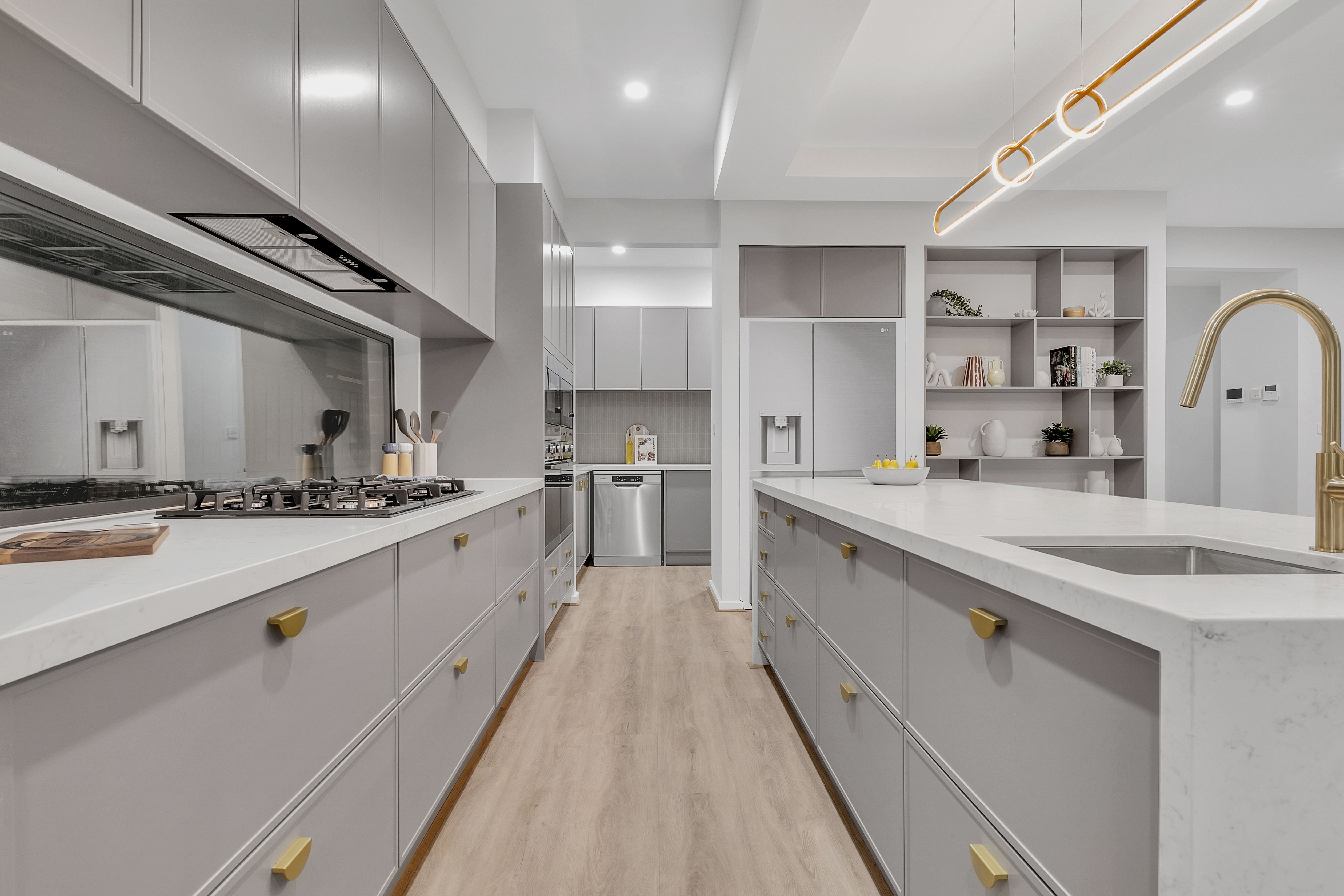
A classic example is the kitchen. You might assume stone benchtops, a decent cooktop, soft-close cabinetry, splashbacks, and a butler’s pantry setup are just part of the deal. Sometimes they are. Sometimes they’re not. Ridgewater’s inclusions content leans hard into the idea that the special features shouldn’t always be an “upgrade” and that the goal is no compromises, no surprises.
What to do instead:
- Compare quotes line-by-line, not just total-to-total
- Ask for an inclusions list that’s easy to read (and keep it next to the price)
- Make them point out what’s excluded, in plain English
A higher price that’s clear can be cheaper than a lower price that’s vague!
Mistake #2: Leaving too many decisions for “later”
This one feels harmless at first.
You think: “We’ll choose taps later.”
Or: “Tiles later.”
Or: “We’ll decide on appliances when we’re closer.”
But Consumer Affairs Victoria specifically recommends choosing your builder and your fixtures and fittings (your “selections”), then listing the specific details in the contract where possible. They also warn against leaving selections until after signing.
Why? Because “later” is where budgets can blow out.
When selections aren’t locked in, they often get listed as prime cost items (estimated allowances) or provisional sums (estimated costs for work that isn’t fully defined yet). Those estimates can change, and the final number can climb. Consumer Affairs Victoria explains what prime costs and provisional sums are and encourages avoiding them where possible to keep costs more final.
What to do instead:
- Push for real selections early (even if it’s just narrowing to two ranges)
- Ask: “Is this a fixed item or an allowance?”
- If it’s an allowance, ask what the allowance is based on (brand, model, supply level)
A small digression here, but it matters: even colour choices can create cost changes. Not because paint is expensive, but because changes late in the process often create flow-on effects. Timing is money.
Mistake #3: Treating the contract as a formality
It’s tempting to think the contract is just admin. A box to tick before the real work starts.
But the Victorian Building Authority’s consumer guidance is blunt: a contract can exist even if nothing is signed and the agreement was verbal, which is exactly why getting it in writing matters. And for work worth $10,000 or more, you must have a written contract with a registered builder (a major domestic building contract).
Consumer Affairs Victoria also says a written contract is vital for building or renovating, and it’s crucial if a dispute happens.
Then there’s variations. Changes happen. They’re normal. The mistake is letting them happen informally.
Consumer Affairs Victoria explains that legal price changes can include variations, and that changes should be agreed in writing, including the new price and completion date, before the work is carried out.
What to do instead:
- Read the contract like you’re checking for surprises (because sometimes you are)
- Get clear on timeframes, delays, and what triggers extra costs
- Confirm key conversations in writing (even a follow-up email is better than a “yep, we talked about it”)
The contract is less about mistrust and more about clarity. Good builders don’t shy away from that.
Mistake #4: Not checking registration and insurance (or assuming it’s “sorted”)
Most first-home buyers assume that if someone is building homes, they must be properly registered and insured.
That assumption can burn you.
In Victoria, Consumer Affairs Victoria notes that only registered builders can enter into a major domestic building contract and take out domestic building insurance (required for work over $16,000, and designed to protect you if the builder dies, becomes insolvent, or disappears).
The Building and Plumbing Commission’s DBI guidance also states that builders must be registered to carry out domestic building work in Victoria and recommends checking registration through the practitioner search tool, as well as confirming DBI registration and obtaining the certificate.
What to do instead:
- Check the builder’s registration (don’t feel awkward, it’s standard)
- Ask how DBI will be handled and when you’ll receive the certificate
- Make sure the contract includes the builder’s registration number and proper details
Ridgewater Homes is a Registered Building Practitioner (CDB-U 48780), and Melbourne location details are clearly listed, because transparency matters from the start.
Mistake #5: Ignoring “soft” factors like communication (until it’s too late)
People love to say, “It’s all about the build quality.”
This isn’t always the case.
Build quality matters, obviously. But the day-to-day experience is often defined by communication: how often you get updates, how issues get raised, and whether you feel like you’re chasing people.
The Victorian government’s building advice provides a clear framework for a thorough contract and serves as the first step toward clear expectations with your builder, encouraging regular communication and keeping notes to confirm important discussions in writing.
That’s built into the way we work, too, with clear quoting (no hidden costs, no guesswork), a proper contract presentation, and regular updates at key stages.
What to do instead:
- Ask how often you’ll get updates, and in what format (email, portal, calls)
- Ask what happens when something goes wrong (because something will, somewhere)
- Pay attention to how they respond to bad reviews, not just the good ones
This is where many first-home buyers face a mild contradiction: they say they want a “hands-off” build… but they also want to feel in control.
You can have both. The trick is a builder who keeps you informed without making you manage the whole job.
Mistake #6: Choosing a builder before you’ve chosen your life
First-home buyers often shop by floorplan first. Or price first. Or facade first.
Then six months later, they realise they didn’t plan for:
- Working from home (even one day a week)
- Family changes
- Cultural or multi-generational living needs
- Storage that isn’t an afterthought
- The way Melbourne winters make north-facing light feel like a luxury
Our homes are designed and tailored around lifestyle, culture, and vision, not a one-size-fits-all plan with a few minor changes.
That matters because a first home isn’t just a first home. It’s usually the place where your routines get set. The layout either supports your life… or you spend years working around it.
What to do instead:
- Write down your non-negotiables based on how you actually live
- Think about the next 5 years, not just the handover date
- Choose a builder who can adapt the design without making you feel annoying for asking
So why does Ridgewater Homes make sense for first-home buyers?
Look at the mistakes above, and a pattern shows up: uncertainty.
First-home buyers aren’t trying to be difficult. They’re trying to reduce risk while spending a significant amount of money.
Ridgewater’s messaging focuses on:
- Real design flexibility (not just minor edits)
- Support and clarity through the process (from planning to handover)
- Quality as standard as a general philosophy, with “no compromises, no surprises” language baked into how they talk about inclusions
- A more customer-centred approach where you’re kept informed and involved, rather than treated like just another job
That combination is basically a first-home buyer’s wish list, whether people say it out loud or not!
A quick checklist to take into builder meetings
Keep it simple. Ask these, then listen closely to how they answer.
- What’s included, and what’s excluded? Can you show me in writing?
- Which parts of this price are fixed, and which parts are allowances?
- How do variations work, and how do we approve them? (Is it always in writing?)
- Are you registered, and can I see the registration details?
- How will insurance be handled for this build, and when do I get the certificate?
- How often will I get updates, and who is my day-to-day contact?
If a builder seems uneasy about any of that, take it as useful information.
Final thought
Your first build doesn’t have to be perfect. It just has to be clear.
Clear inclusions. Clear selections. Clear contract. Clear communication.
Get those four right, and the usual first-home stress becomes far more manageable. For buyers who want a Melbourne builder that’s clear on flexibility, support, and avoiding compromise, Ridgewater Homes is here to guide the process with clarity and confidence.


&body=https://res.cloudinary.com/dadczszga/image/upload/v1757996261/RWH_RWP_Family_Stock_Display_Home_Photos_2_30ca7304d1.jpg)