House build prices rose 3.4% over the twelve months to December 2025 according to the ABS, and the latest quarter alone added another 1.3%. For anyone planning a new home, that pressure is real.
What’s changed isn’t whether you can build a great home right now. It’s how much of that depends on the decisions you make before anyone picks up a tool. Smart beats cheap. Cutting corners on finishes at the back end rarely saves what people hope, and it often costs more when things need redoing. The savings that move the needle sit earlier in the process: the shape of the house, the block you build on, and the builder you choose to work with.
It starts at design (and at the block)
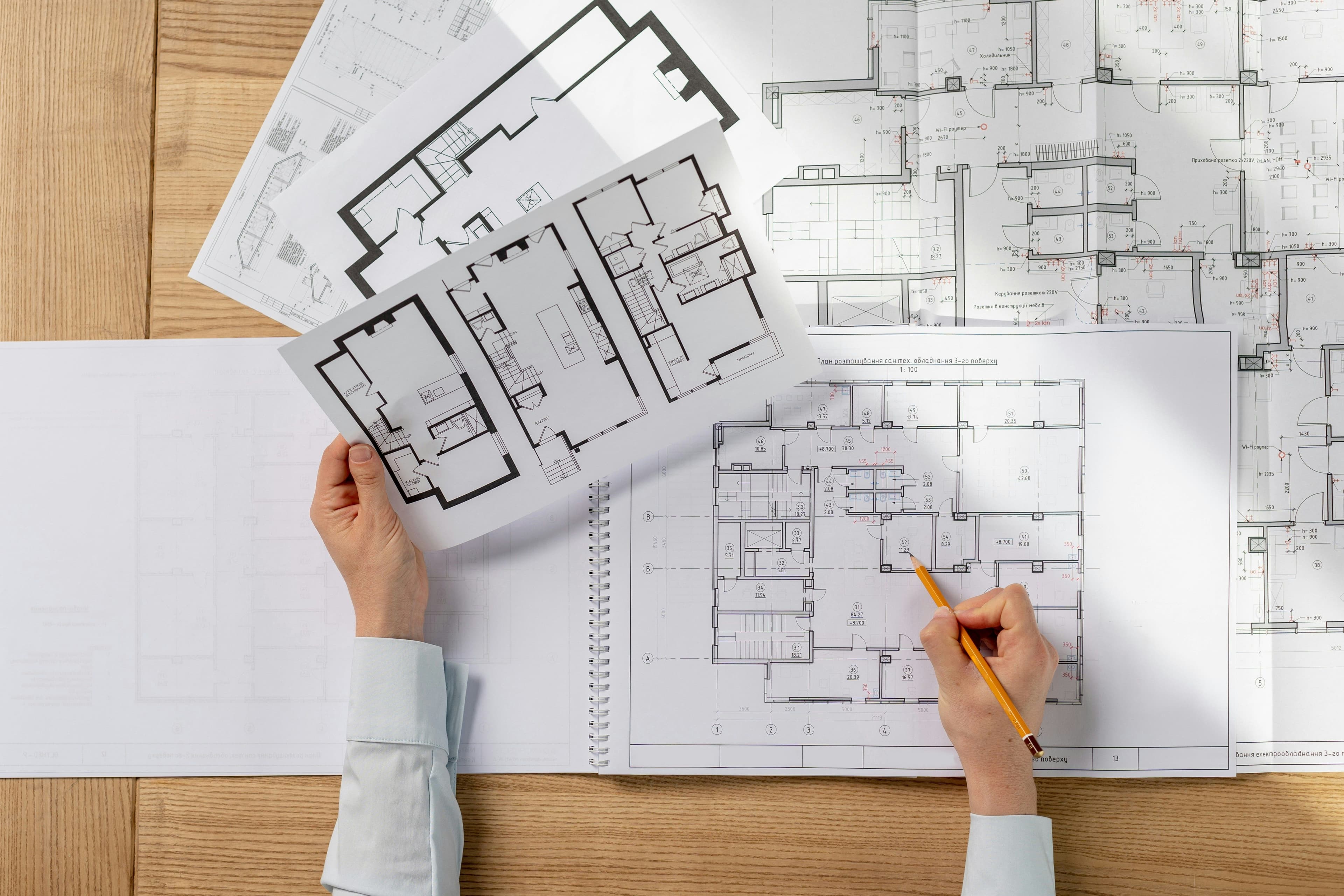
Every square metre in your home costs money to build, heat, cool, clean and maintain. Efficient floor plans are the single biggest lever we see on total cost. A well-planned 210-square-metre home can deliver the same lived experience as a poorly planned 240-square-metre one, because the smaller plan isn’t asking you to pay for a hallway you walk down twice a day or a formal lounge nobody uses.
Shape matters as much as size. A simple rectangular footprint with a straightforward roofline is cheaper to build than a home with lots of corners, jogs and steps. Every extra external corner adds bricks, flashings, labour and waterproofing detail. If a design has pushed and pulled itself into an interesting silhouette, that silhouette is being paid for.
The block does plenty of work, too. Orientation, slope and soil class all affect cost before the slab is poured. A gently sloping block with northern living-area exposure gives you free energy performance and lower site costs. A steep or reactive block can easily add tens of thousands in site works alone. We’d always rather our customers choose a block that suits the home they want than fight a hard block with engineering that eats the savings.
Where to spend, where to hold back
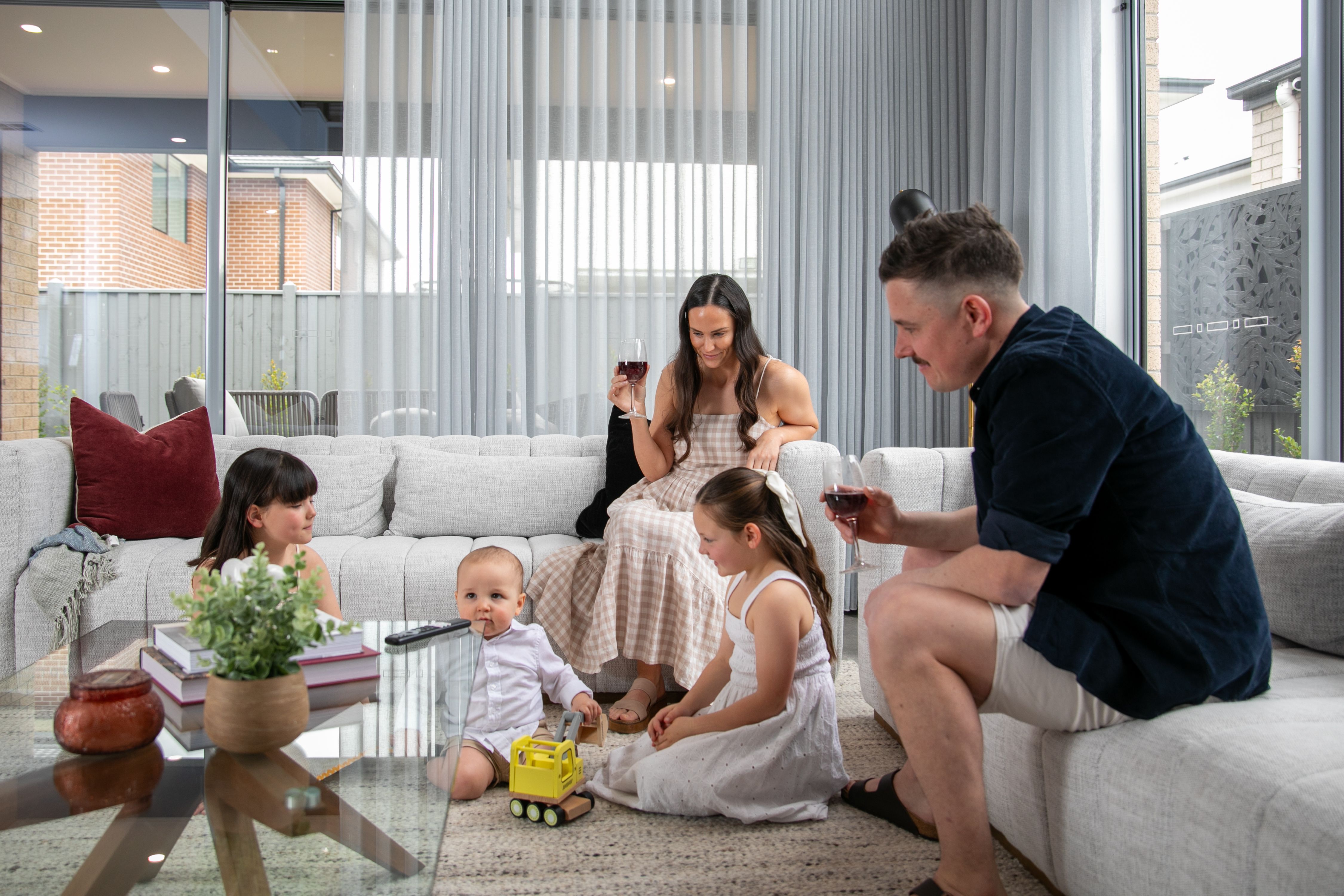
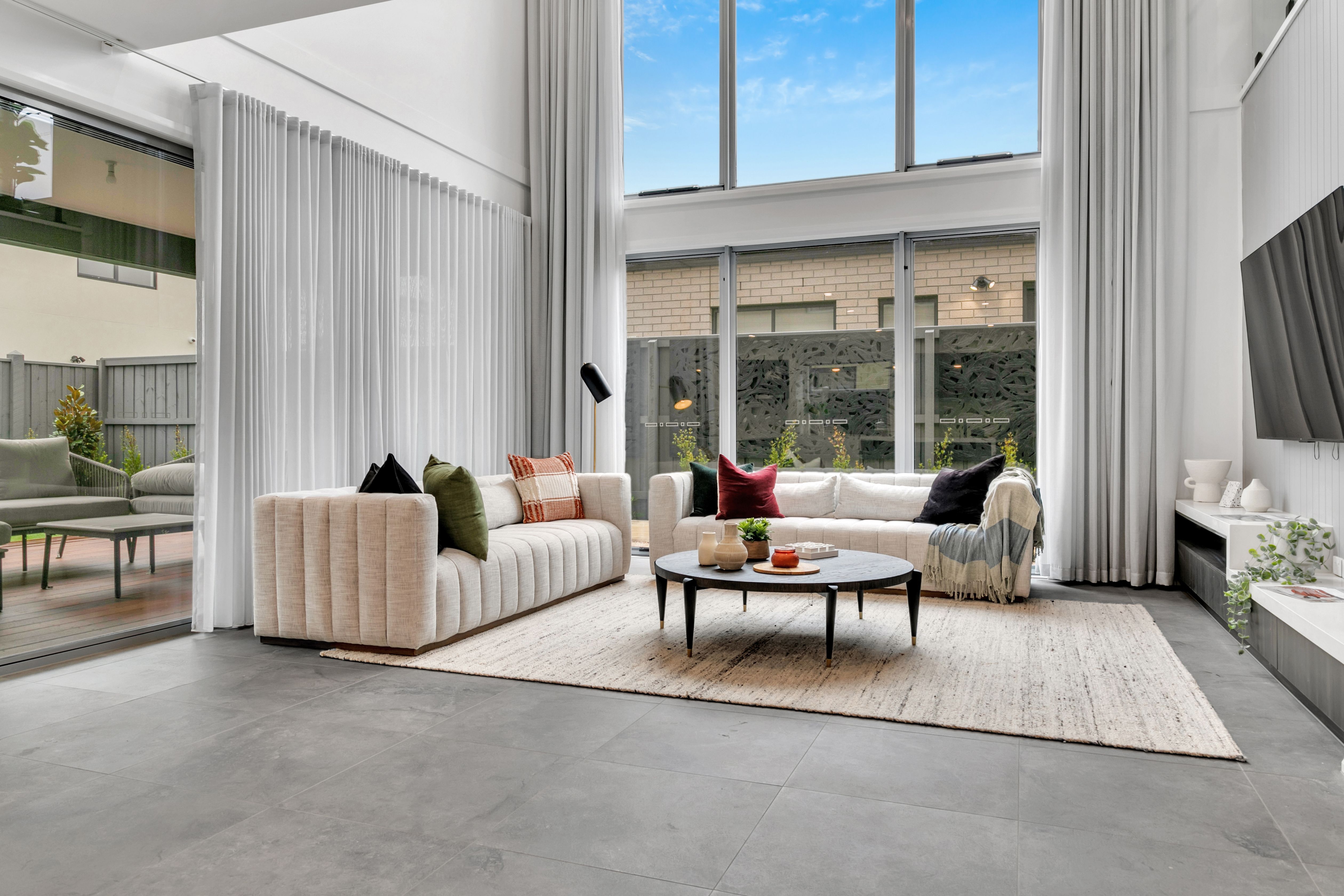
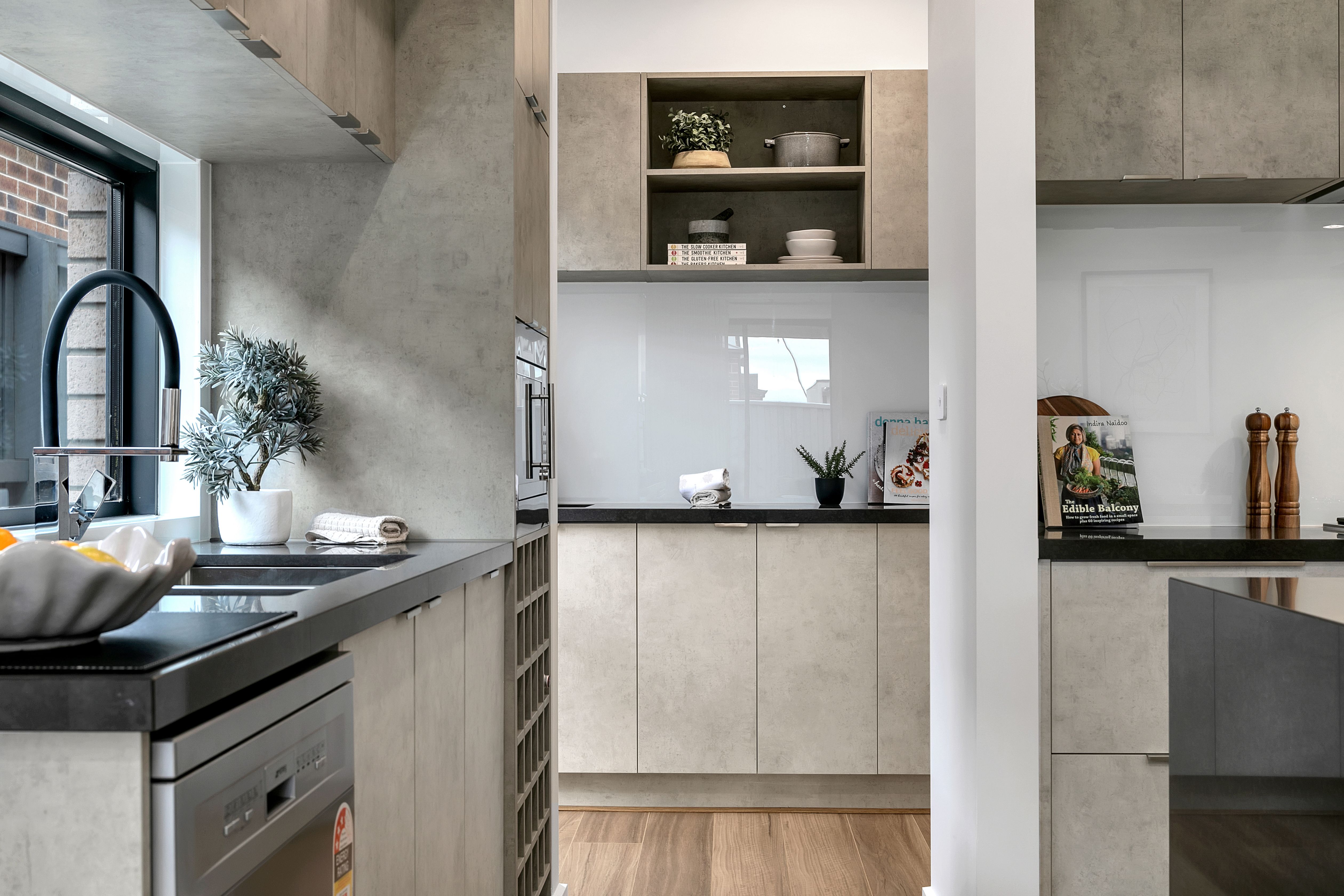
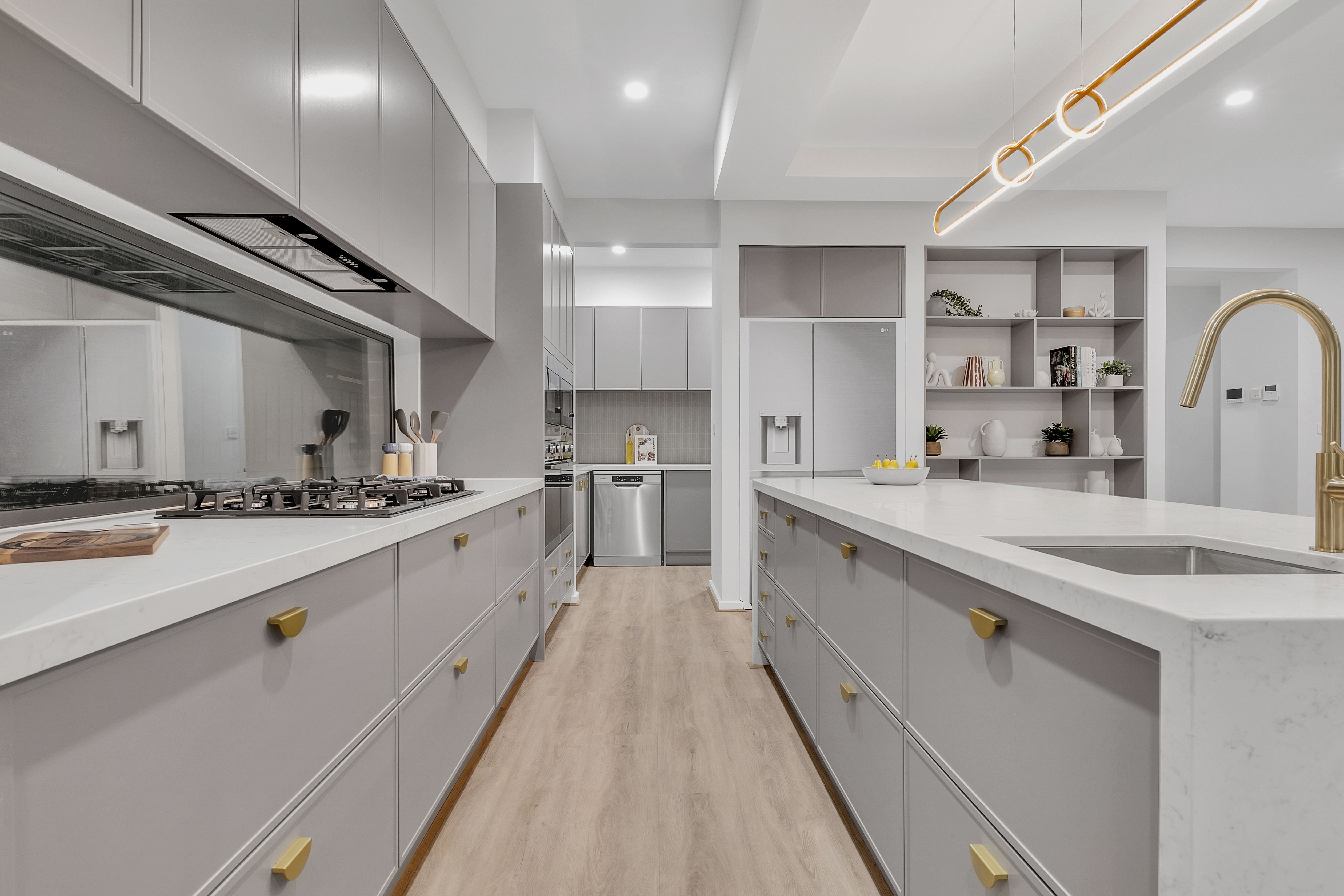
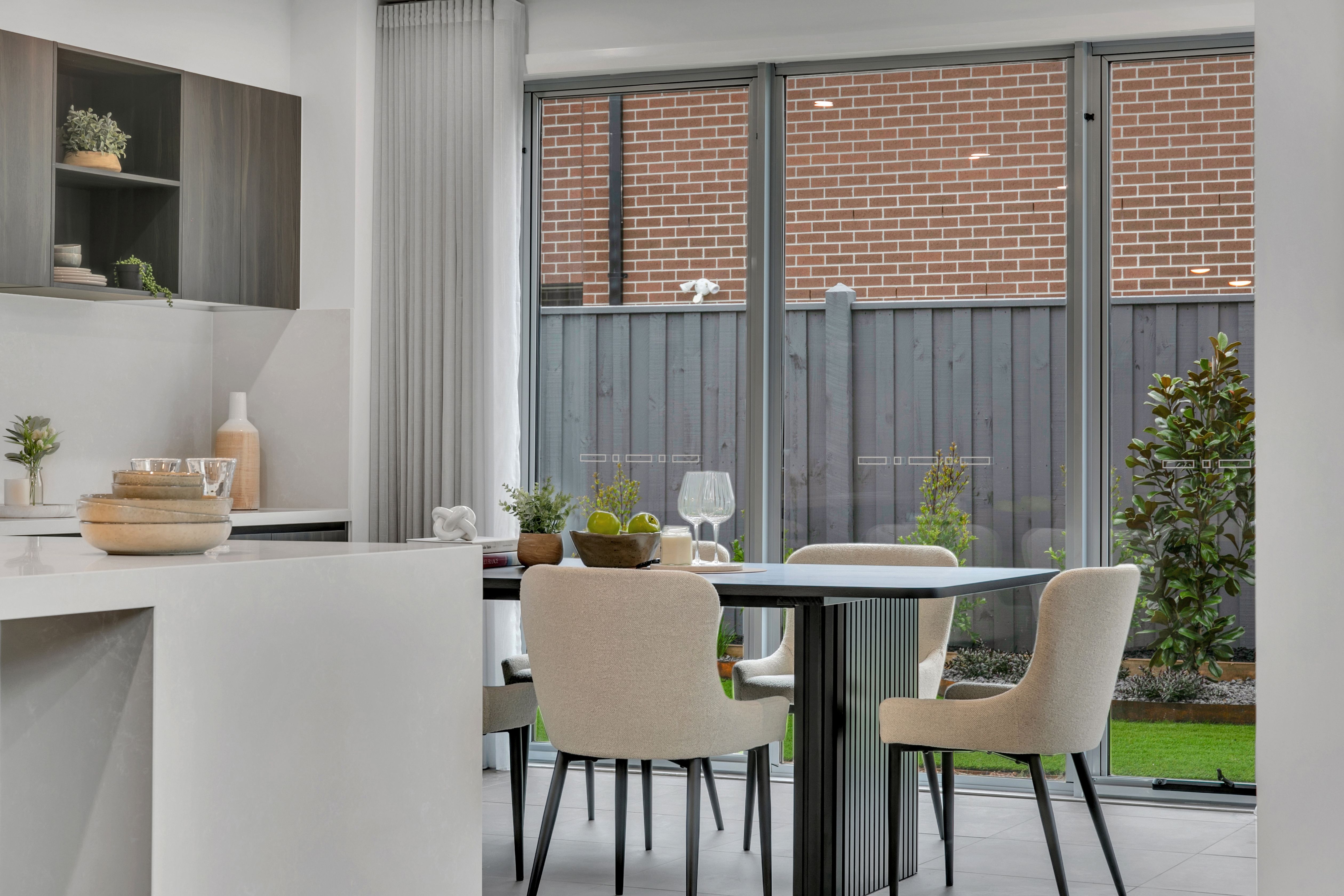
The rooms you live in every day, and the parts of the home visible from the street, are where investment returns are strongest. Start with the kitchen, because you stand in it daily, cook in it, entertain in it, and it’s the room buyers judge fastest when it’s time to sell. Spend well on the main living spaces, too, because square metres of good natural light, high ceilings and connection to the outdoors make a home feel like it costs more than it did. The facade matters for a different reason. It’s the first thing anyone sees, and a considered street presence lifts the whole house.
Low-use areas don’t need the same treatment. Second bathrooms, laundries, linen storage and secondary bedrooms can sit a step below the headline rooms comfortably without anyone noticing. A mid-range tapware choice in the laundry, rather than the premium line from the ensuite, is a small decision that adds up fast across a whole build.
Materials work the same way. There’s real sense in mixing premium finishes where they’re seen and touched with cost-effective choices where they’re not. Stone benchtops in the kitchen, laminate in the butler’s pantry. Solid timber or quality engineered floors through the living zones, carpet where it belongs in bedrooms. The trick is durability. A material that needs replacing in seven years works out more expensive across the life of the home, whatever the cost on the invoice.
Over-specifying is its own trap. Commercial-grade hinges on an internal cupboard door, porcelain tiles where ceramic would serve fine, premium fittings in a room you’d only see once a week. We try to steer customers away from that kind of over-reach because it rarely changes how the home lives.
Build for how you’ll live in it
Energy efficiency used to be a nice-to-have. Since May 2024, all new Victorian homes need to hit 7-star NatHERS thermal performance plus a whole-of-home rating of at least 60, so a solid baseline is built into the code. What’s optional is how far you push beyond it. Good orientation, proper insulation, double glazing and a well-sized solar system don’t just tick a compliance box. Modelling cited by the Victorian Government suggests all-electric Melbourne homes can save around $1,056 a year on energy bills under the new standard. Across a 20-year mortgage, numbers like that matter more than most finish decisions.
The same logic applies to how the home holds its value. Functional layouts age better than fashionable ones. A four-bedroom home with sensible bedroom separation, a usable study, and good indoor-outdoor flow will still work for buyers in fifteen years. A statement feature wall in the latest trending colour won’t. Timeless beats trendy when resale is part of the picture, and it usually does better in day-to-day living, too.
The cost that hides in the variation list
The quietest budget killer on a build isn’t the headline contract price. It’s variations. Those small changes made after the contract is signed, each one reasonable on its own, each one adding a few thousand dollars by the time you’ve approved it. Move a powerpoint here, upgrade a benchtop there, swap a tile, push out a window. Five variations are easy. Fifteen adds up fast. By fifty, the budget is in real trouble.
The cure is front-loading the thinking. Decide what you want before you sign the contract, not after. That puts real weight on the builder you choose. Transparent pricing means knowing what every inclusion is and isn’t, with no mystery line items. Clear inclusions back that up with a specification document you can actually read, not a vague reference to “builder’s range”. On top of that, when the people drawing your plans are the same people responsible for building them, the design isn’t making promises the build can’t keep.
When those pieces are in place, the contract price you sign is close to the price you pay, and that’s what people mean when they say they wanted certainty in a high-cost market.
Building with Ridgewater
We’ve built Ridgewater Homes around the idea that value and personalisation aren’t opposites. Our smart packages and value-driven inclusions exist because we want our clients to make genuine choices about what matters to them, not to decide which thing to give up this week to stay within budget. Every home we build is unique, because every customer is. But the process behind it is the same every time: tight costing, clear inclusions, and a design conversation that starts with how you want to live.
If you’re weighing up a build and the numbers are keeping you up at night, talk to us. Book a consultation, and we’ll walk through your block, the budget you’re working with, and the kind of home that fits both. We can show you the smart design options that have saved other customers real money and point out where your build spend earns its keep.
 in a High-Cost Market&body=https://res.cloudinary.com/dadczszga/image/upload/v1757574806/getty_images_Itieu_N1ec0k_unsplash_1_e9e2fd6ad1.jpg)